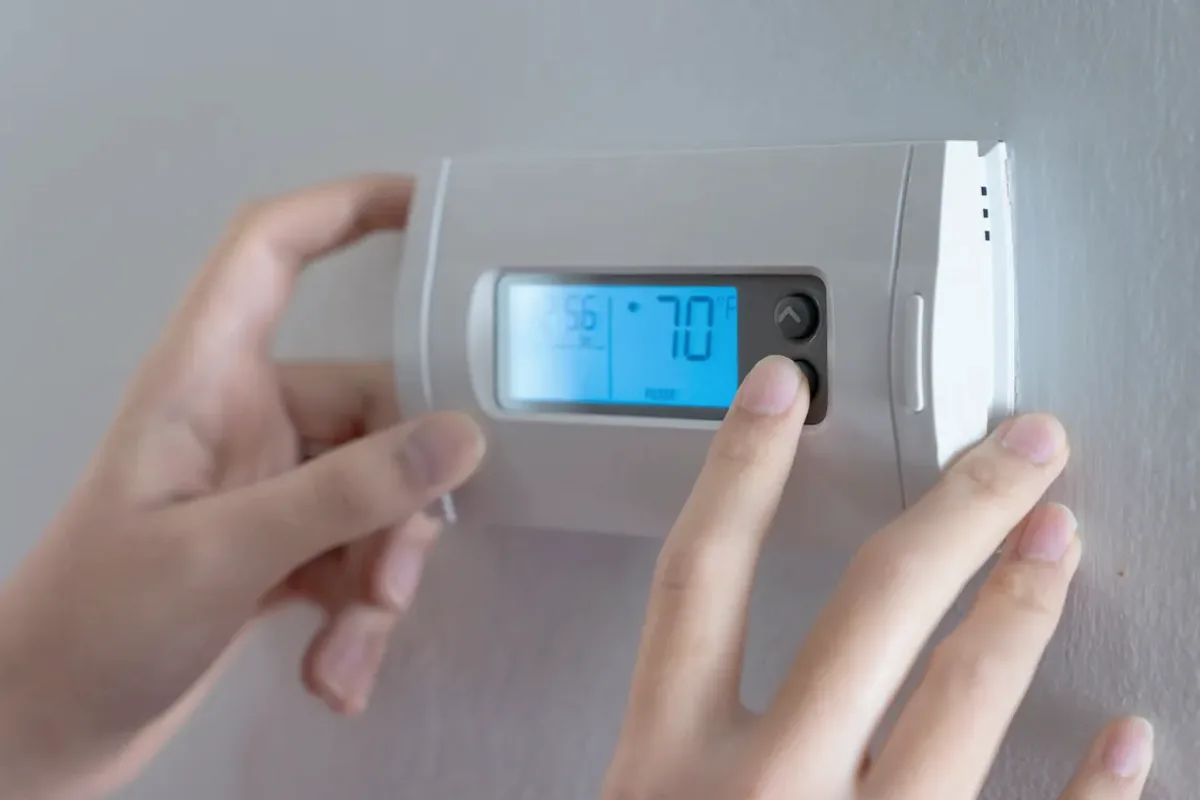
Request thermostat repair & replacement for a property in Guelph. Include the equipment, the problem or planned work, and your location so the request can be reviewed.
How can a thermostat fault be separated from a problem in the connected HVAC system?
A thermostat that will not turn on, displays an unexpected temperature, or fails to control connected equipment may have a power, sensor, wiring, setting, or compatibility problem. Repair diagnosis should distinguish a thermostat fault from an issue in the low-voltage control circuit or the heating and cooling equipment. Replacement is a separate decision when the thermostat is obsolete, damaged, or does not support the needed controls. The existing system and wiring determine which replacement options are suitable.
The thermostat model, display behavior, wiring configuration, connected equipment, and symptom timing help frame the assessment. Appropriate testing can check thermostat power, transformer output, wiring continuity, and whether a heating or cooling call reaches the equipment. Those observations matter because replacing a thermostat will not resolve a separate transformer, wire, or equipment fault. Compatibility checks also establish whether a programmable or smart model can control the existing system.
Thermostat power, transformer output, and low-voltage wiring
Temperature sensing, settings, cycling, and control communication
Programmable or smart thermostat compatibility and replacement
Assessment and Scope
Questions for the Proposed Work
01
Trace power and control communication
A blank display may reflect batteries, a power-supply issue, wiring, or a failed thermostat, depending on the model. If the display works but the system does not respond, testing can compare the thermostat call with transformer output and the control circuit at the equipment. This separates a local thermostat issue from a connection or equipment fault. Internal electrical testing belongs to a qualified service process; occupants should not handle control wiring or bypass a safety device.
02
Check sensing and operating behavior
A displayed temperature that differs from the room or a system that cycles unexpectedly can involve sensor placement, settings, wiring, or equipment response. Record when the difference occurs and whether it affects heating, cooling, or both; that context helps target the inspection. A thermostat adjustment may be appropriate when settings explain the behavior, while confirmed hardware or circuit faults call for repair. Symptoms alone do not establish which component has failed.
03
Verify compatibility before replacement
A replacement thermostat must match the heating and cooling equipment, available conductors, control voltage, and any stages or accessories in use. Programmable or smart features are useful only when compatible with the system and desired control arrangement. Older equipment or unusual wiring may limit choices or require additional work. Compare the existing model and wiring with the replacement specifications before installation, rather than assume that every thermostat can operate every furnace, air conditioner, or heat pump.
Compare the next step
Identify all existing schedules, remote accounts, and sensors before replacing the control. Ask who owns the app account and whether an offline operating mode is available. Have the equipment response demonstrated at handover so the new owner can distinguish a normal control sequence from a fault.
Thermostat wiring is not universal. Do not connect wires by colour alone or work on energized wiring; a compatible control must be configured for the equipment it serves.